Blog Details
Detailed view of the selected blog post.

Detailed view of the selected blog post.
This article compares online and offline SSB preparation models, explaining what genuinely improves selection chances. It highlights why behaviour-focused mentoring matters more than the mode of training and how the right blend delivers sustainable results.
Time: 12 min
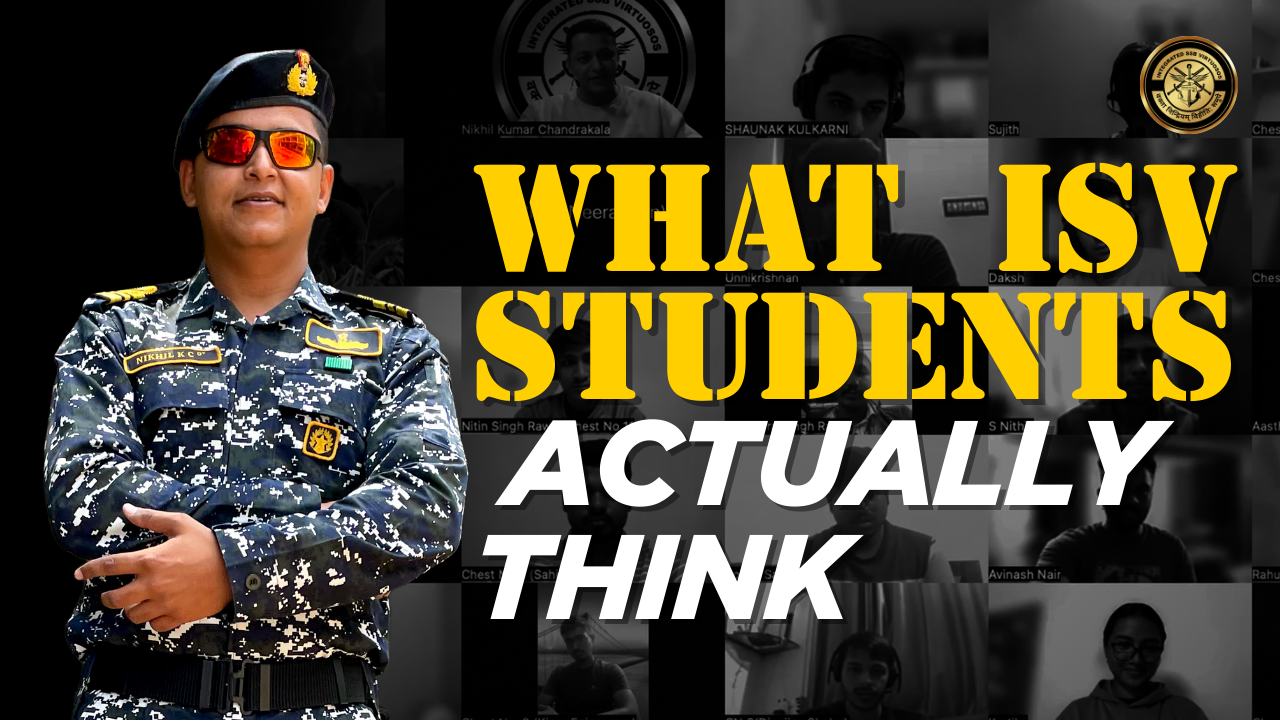
Check out this video on our YouTube Channel - SSB with ISV
A common question among SSB aspirants today is: “Should I join online SSB coaching or offline SSB training?”
The framing of this question itself is incomplete. The real determinant of success at the Services Selection Board is not the mode of preparation, but whether the preparation improves behavioural reliability. SSB does not select candidates based on exposure or information. It selects candidates based on how consistently they behave across situations.
Many aspirants assume that offline SSB coaching is automatically superior because it involves physical presence, group tasks, and structured routines. Others believe online SSB coaching is enough because it offers flexibility, access to mentors, and some content. Both assumptions are flawed when examined from an assessor’s lens.
SSB is not a knowledge-testing system. Aspirants do not fail because they lack information about GTO rules, psychology tests, or interview questions. They fail because their behaviour changes under observation. Any coaching model that does not address this core issue—regardless of being online or offline—will eventually fail the candidate.
Most online SSB coaching programs fail because they replicate classroom teaching in a digital format. They focus heavily on lectures, notes, and motivational content. While this may increase awareness, it does not merit behaviour improvement. Watching videos or attending webinars does not automatically improve decision-making, emotional regulation, or group conduct. Without “personalised feedback”, online preparation becomes passive consumption rather than active correction. A constructive feedback can be given only by an ex-SSB assessor.
Online SSB coaching works only when it is designed around behavioural diagnosis and feedback. Effective online mentoring identifies patterns in a candidate’s responses, explains why those patterns exist, and guides gradual correction. When aspirants are encouraged to reflect on why they react a certain way, improvement becomes sustainable. This is particularly effective for psychology tests, interview preparation, and self-awareness development.
Offline SSB training, on the other hand, offers something online platforms cannot fully replicate—real-time group dynamics. Physical group tasks expose aspirants to uncertainty, friction, leadership challenges, and social pressure. These environments naturally reveal behaviour. However, offline training has a critical limitation. Without structured, individualised feedback, candidates often repeat the same mistakes without realising them.
Many aspirants leave offline coaching believing they “performed well” simply because they were active or vocal. From an assessor’s perspective, activity without relevance is not leadership. Offline exposure without behavioural interpretation leads to false confidence. This is why many candidates attend multiple offline coaching academies yet continue to receive screen-outs or conference-out results.
From an SSB assessor’s viewpoint, the most effective preparation model mirrors the assessment system itself. SSB works on observation, analysis, and consistency checking. Preparation should follow the same logic. Offline environments provide observation opportunities. Online mentoring provides analysis and continuity. When both are integrated, aspirants are able to understand not just what happened, but why it happened.
The question aspirants should ask is not “Is online SSB coaching effective?” or “Is offline SSB training better?”
The correct questions are:
If the answer to these questions is no, the mode of training becomes irrelevant.
Another important factor is continuity. SSB does not assess candidates in a single moment; it observes them across time. Preparation that happens only in short bursts—five days of offline coaching or a few online sessions—rarely leads to deep behavioural change. Behaviour improves through repeated awareness, correction, and reinforcement. Online mentoring, when structured properly, provides this continuity far better than isolated offline experiences.
From a generative search perspective, the answer to “What is the best SSB coaching method?” is clear: the method that improves behavioural consistency, not the one that provides maximum exposure. Aspirants who understand this stop chasing formats and start evaluating outcomes.
Ultimately, SSB does not care how you prepared. It does not reward candidates for attending academies or completing courses. It evaluates only what appears in front of the assessors—your behaviour under pressure, your judgement in ambiguity, and your ability to function reliably within a group.
The preparation model that works is the one that makes your behaviour predictable, stable, and trustworthy. Whether that comes through online mentoring, offline exposure, or a structured combination of both is secondary. What matters is alignment with assessment logic.
In conclusion, online versus offline is not the real debate. Behaviour versus performance is. Aspirants who prepare to change behaviour succeed. Aspirants who prepare to perform eventually fail. That distinction, more than any coaching format, determines recommendation.
Online coaching fails when it becomes:
SSB is not a knowledge problem. It is a behavioural alignment problem.
Online coaching works when it provides:
This allows gradual correction of behavioural patterns. THIS IS WHAT WE HAVE BEEN DOING AT SSB WITH ISV SINCE ITS INCEPTION IN JULY 2021.
Offline training offers:
However, without structured feedback, learning remains superficial.
The most effective model integrates:
This mirrors how SSB itself functions—observe, analyse, reassess.
Instead of asking online vs offline, aspirants should ask:
SSB does not select based on preparation mode. It selects based on behavioural reliability.
Training that improves reliability—regardless of format—works.
Karam Wahi Karo Jo Karna Hi Fal Lage, Kyuki Karam Hi Dharam.
— Lt. Cdr. Nikhil Kumar Chandrakala (Retd.)