
Blog Details
Detailed view of the selected blog post.

Detailed view of the selected blog post.
This blog explains what the Group Testing Officer (GTO) actually observes during the SSB interview process. It highlights how your behaviour in GTO tasks - leadership, emotional stability, rule integrity, and influence, is compared with your personal interview responses to assess consistency and Officer Like Qualities.
Time: 08 min

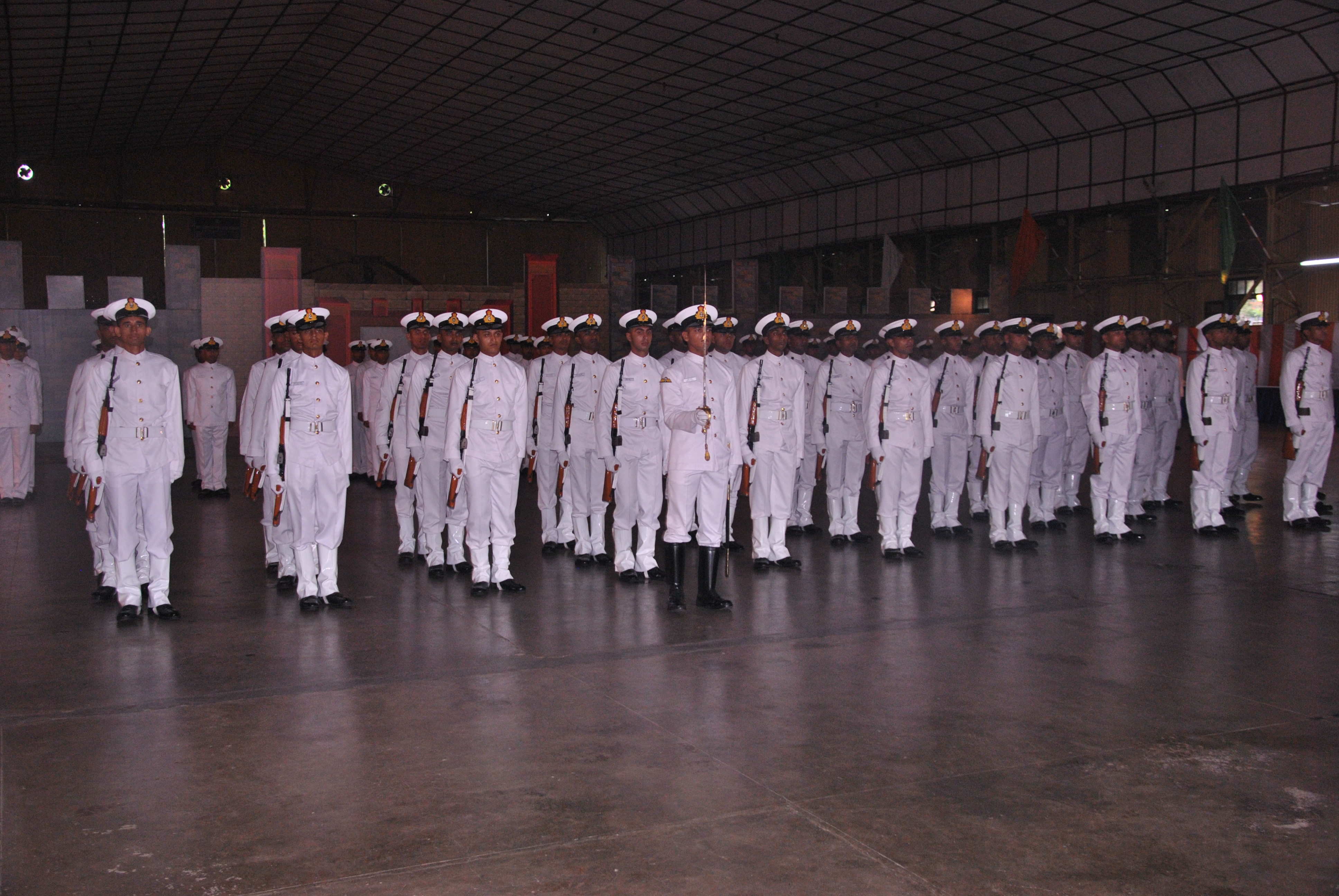
A glimpse of Passing Out Parade of Executive Branch Officers of the Indian Navy
Many aspirants assume that once the outdoor GTO tasks are over, the Group Testing Officer’s assessment is complete. Many aspirants give humongous importance to RASSI PHATTA BALLI and are wary of the fact that Command Task (CT) is the deciding task for recommendation. That assumption is incorrect.
You may think that GTO is looking somewhere else while the group is performing the task. You may make a conscious effort to make yourself “noticed” during the GTO tasks. This is definitely not required.
The GTO's observations travel with you into the final evaluation. The Services Selection Board (SSB) works on behavioural triangulation. The Psychologist, Interviewing Officer (IO), and Group Testing Officer (GTO) independently assess the same Officer Like Qualities (OLQs) using different tools.
So the real question is not whether the GTO is physically present during your SSB interview.
The real question is:
“What behavioural patterns has your GTO already recorded about you?”
The GTO evaluates candidates through:
Unlike the Interviewing Officer, who assesses through conversation, the GTO observes you in action. His assessment is behaviour-based, not answer-based.
If during GTO tasks you:
The GTO has already noted the inconsistency.
Now, during the SSB interview, if you speak about leadership, cooperation, or responsibility, your statements will be mentally compared with your earlier conduct.
SSB does not assess isolated moments. It assesses alignment. If your interview answers contradict your GTO behaviour, your credibility weakens.
The GTO does not assess how much you speak. He assesses how much you influence.
Influence in GTO tasks is seen when:
Now consider this: during your personal interview, when you describe leadership experiences, the IO may ask for examples.
Your GTO already knows whether you demonstrated real influence or superficial dominance.
If you exaggerated in the interview, your behavioural record will expose you during the conference.
During the Progressive Group Task, the Half Group Task or the Command Task, the GTO watches your emotional shifts:
These reactions are subtle but measurable.
In the SSB interview, probing questions are often designed to test emotional stability again. If your composure in the interview differs sharply from your outdoor behaviour, inconsistency is recorded.
Behaviour must remain stable across physical and conversational stress.
One of the most misunderstood OLQs is initiative.
The GTO differentiates between:
Candidates who try to control the group excessively are not seen as leaders. They are seen as insecure.
In the interview, when asked:
“Are you a leader?”
Your answer is less important than your behavioural evidence.
The GTO has already observed whether you:
Leadership is behavioural proof, not verbal claim.
In GTO tasks, rules are clearly explained. They are intentionally restrictive.
The GTO observes:
Integrity under low supervision is a strong indicator of officer potential.
If in the SSB interview you speak about honesty and discipline, but during GTO tasks you casually violated rules, the mismatch is obvious.
SSB selection depends heavily on trust.
The GTO is not evaluating isolated performances. He observes patterns from:
First Group Discussion
to
He watches whether your behaviour:
Leadership cannot switch on for Command Task and disappear in Group Obstacle Race.
By the time conference arrives, the GTO presents a behavioural summary—not emotional impressions. That summary influences final decision.
Throughout the GTO series, the officer is silently answering one question:
“If I place this candidate in a small team with operational responsibility, will the team function better or worse?”
This question remains active during the final board discussion.
Your interview answers do not erase your outdoor conduct.
They must align with it.
If you want to understand what your GTO is looking at in SSB interview, understand this:
He is not listening to your words in the interview. He is comparing your words to your behaviour.
The Services Selection Board does not reward performance. It rewards behavioural reliability.
When your Group Discussion conduct, Command Task decisions, psychology responses, and personal interview answers align seamlessly, the board gains confidence.
And confidence in your reliability is what leads to recommendation.
KISS rule - Keep It Simple Stupid
— Lt. Cdr. Nikhil Kumar Chandrakala (Retd.)