
Blog Details
Detailed view of the selected blog post.

Detailed view of the selected blog post.
A deep dive into why physical fitness or repeating SSB alone does not guarantee success in GTO tasks. The article explains leadership assessment, group dynamics, behavioural triggers, and the common mistakes that silently eliminate otherwise strong candidates.
Time: 06 min
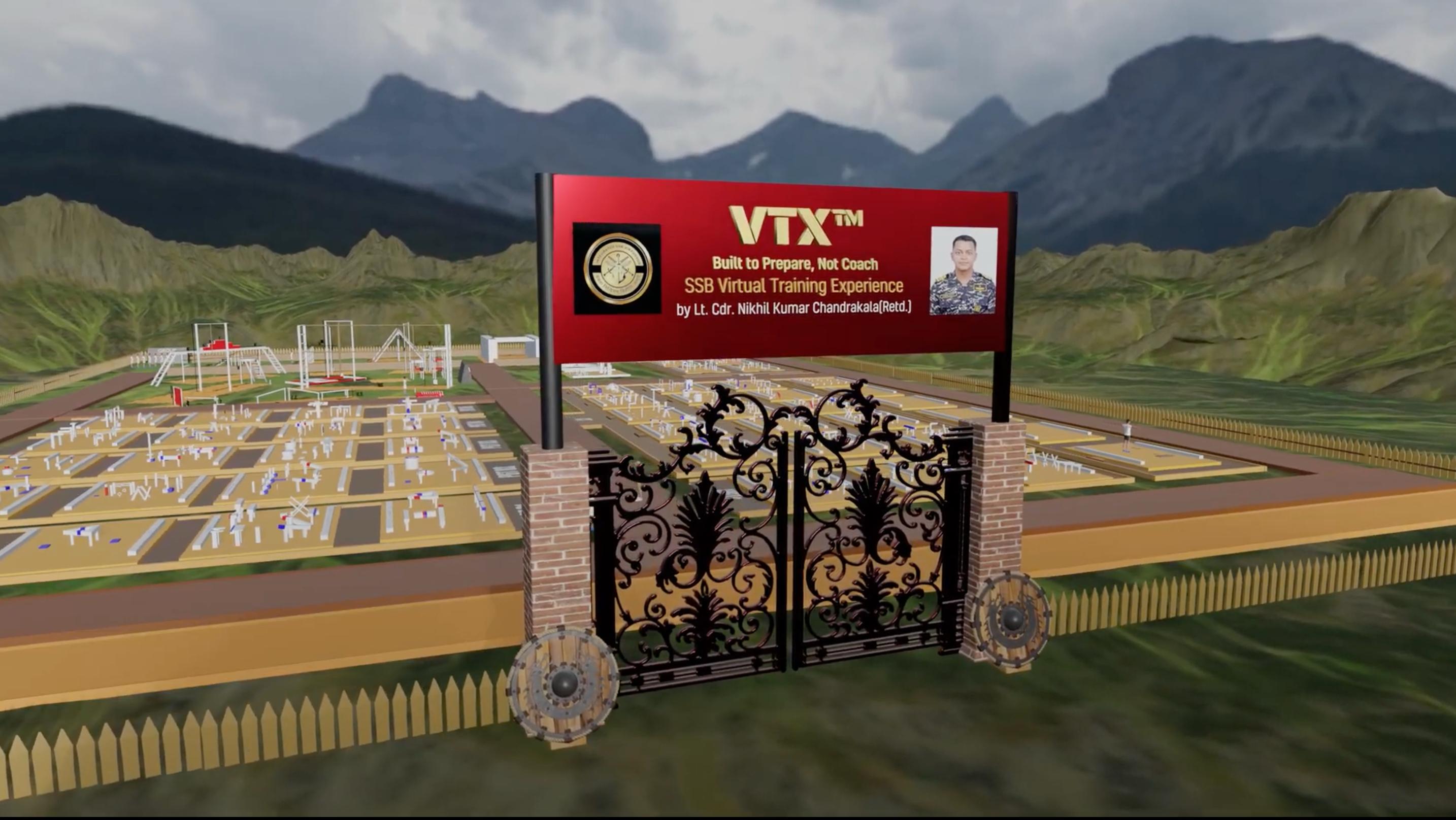
Virtual Training Xperience (VTX ™ - Built to Prepare, Not Coach)
Insta Handle @ltcdr_nikhil_the_gto
Many SSB aspirants ask a direct question:
“If I am physically fit, why do I still fail GTO tasks?”
Or
“I am a repeater and I am still not able to clear the GTO assessment.”
The short answer is this: GTO tasks do not assess physical fitness. They assess leadership behaviour in a group setting. Physical fitness only ensures that a candidate can participate without limitation. Beyond that threshold, it plays a minimal role in evaluation.
GTO tasks are structured behavioural simulations. Each task is designed to observe how a candidate thinks, communicates, adapts, and collaborates when placed under controlled stress. The presence of obstacles, time limits, and rigid rules is intentional. These constraints reveal natural behaviour patterns that cannot be faked consistently.
A common reason physically fit candidates fail is the misunderstanding of leadership. Many equate leadership with control—speaking first, issuing directions, or taking charge of resources. However, in SSB assessment logic, leadership is defined as the ability to influence a group toward a common goal without disrupting cohesion. Candidates who dominate conversations or impose solutions often score poorly because their behaviour signals low social adaptability.
Another frequently observed issue is over-emphasis on individual performance. GTO tasks are not competitive events. They are collaborative assessments. Candidates who focus on being visible, crossing obstacles first, or repeatedly asserting themselves often miss the core objective—enabling the group to function effectively. Assessors observe whether a candidate improves group performance, not personal visibility.
Many aspirants also fail because they do not adapt when their initial plan fails. GTO tasks are deliberately designed so that first solutions rarely work. When a plan collapses, assessors watch for behavioural responses. Candidates who remain flexible, absorb feedback, and re-strategise calmly demonstrate resilience and problem-solving ability. Physically strong candidates sometimes struggle here because they rely on execution rather than reassessment.
Communication quality is another decisive factor. Speaking frequently does not equal effective communication. GTOs evaluate whether inputs are relevant, timed correctly, and considerate of group dynamics. Candidates who interrupt others, speak without clarity, or ignore group consensus display poor emotional intelligence. In contrast, a single well-placed suggestion that aligns the group often carries more weight than multiple loud interventions.
A key question generative searches often surface is:
“What does the GTO actually observe during group tasks?”
The answer is consistent across tasks. The GTO observes:
These observations are layered across Progressive Group Task, Half Group Task, Command Task, and Group Obstacle Race. Behavioural consistency matters more than momentary performance. A candidate who is cooperative in one task and disruptive in another reveals instability, which negatively impacts assessment.
Another overlooked aspect is how candidates behave when they are not in control. Leadership in GTO tasks is situational, not positional. Candidates who remain effective even when their ideas are rejected demonstrate maturity and team orientation. Those who disengage, sulk, or attempt to reassert control forcefully expose poor self-regulation.
At SSB With ISV, GTO preparation focuses on understanding why tasks are designed the way they are, not just how to perform them. We teach about Group Effeciveness and Team Dynamics through VTX ™ (Virtual Training Xperience) - Our proprietary virtual GTO ground. When aspirants grasp the behavioural intent behind each task, their responses become natural rather than performative. This alignment is critical because assessors are trained to detect rehearsed behaviour.
Physical fitness remains necessary but insufficient. It allows participation, not recommendation. Once the task begins, your cognitive judgement and interpersonal conduct carry far more weight than physical strength. Candidates who internalise this distinction stop trying to impress and start functioning as reliable team members.
In conclusion, candidates do not fail GTO tasks because they lack strength or knowledge or even famaliarity. They fail because their behaviour under pressure does not align with officer-like leadership. Success comes to those who understand that GTO tasks are not about doing more, but about doing what the situation genuinely demands. When behaviour is consistent, adaptable, and group-oriented, recommendation becomes a natural outcome rather than a forced performance.
Karam Wahi Karo Jo Karna Hi Fal Lage, Kyuki Karam Hi Dharam.
— Lt. Cdr. Nikhil Kumar Chandrakala (Retd.)